The Largo Area Local Place Plan (LPP) was submitted by the Largo Area Community Council and jointly developed with Largo Communities Together. It represents a significant community‑led effort to shape the long-term vision of the area’s villages, natural spaces and infrastructure. The plan reflects extensive engagement with residents of all ages. It offers a cohesive strategy for a thriving, sustainable, and resilient future.
Fife Council supported this process by providing targeted climate expertise. The Council’s Planning Team introduced the Environmental Strategy Officer to the community group. They played a key role in helping ensure climate considerations were meaningfully integrated throughout the plan.
The Role of Fife Council in Supporting a Climate‑Informed Approach
The Local Place Plan was community-led. However, Fife Council provided specialist input to ensure the plan aligns with climate policy, sustainability principles and key strategic frameworks. These frameworks include the Climate Fife Strategy, the Local Biodiversity Action Plan and National Planning Framework 4.
The Council’s role included:
- Supporting climate-oriented workshop discussions, including facilitating a dedicated climate table.
- Introducing tools such as the Climate Lens Tool. This allowed the group to test ideas against themes of energy efficiency, biodiversity, emissions reduction and climate resilience.
- Ensuring alignment between community ambitions and Fife-wide strategies – including sustainable travel, biodiversity, built environment and energy planning.
- Helping the community connect climate considerations to practical priorities. These include preserving natural spaces, promoting active travel and preparing for future resilience.
This partnership allowed the community to understand the co‑benefits of climate action. They were able to embed these into proposals spanning housing, infrastructure, environment, culture and recreation.
Community Engagement
The Local Plan Plan is rooted in extensive engagement across the entire Largo Area. It has a clear ambition “to reach everyone in the area”. Community engagement included:
- A postcard survey delivered to every household (approximately 1800 homes).
- Online surveys, social media promotion, and articles in the local newspaper.
- Engaging with existing groups, long‑term residents, community councils, local organisations, and youth groups.
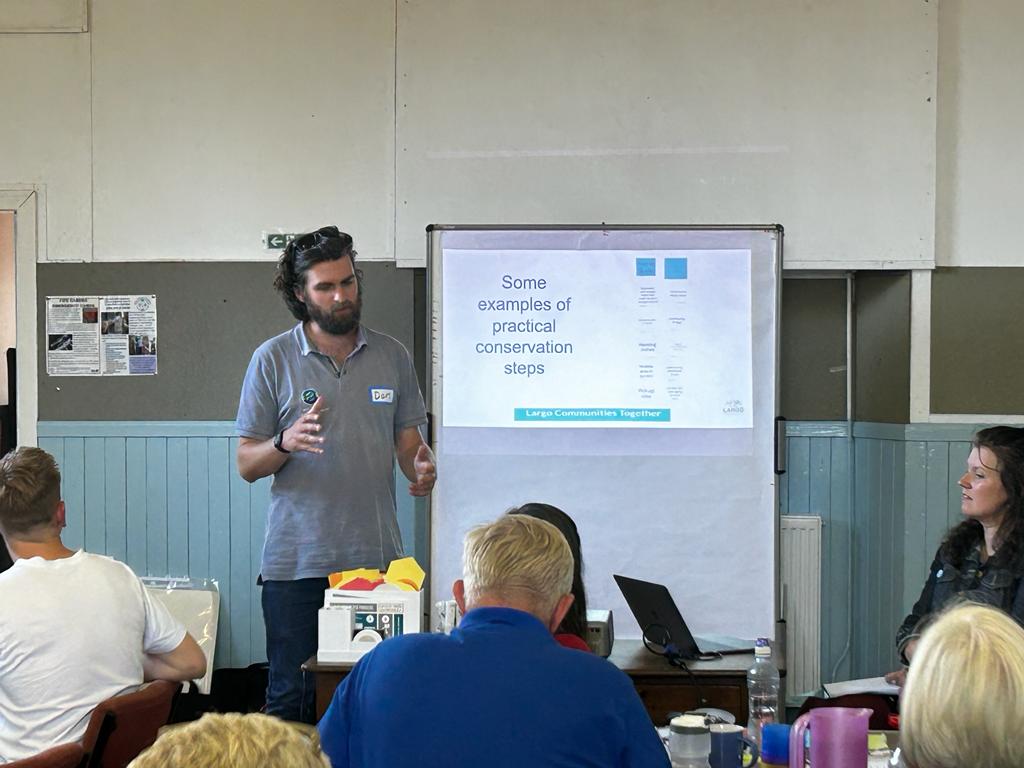
- Workshops, drop‑in sessions, and facilitated table discussions.
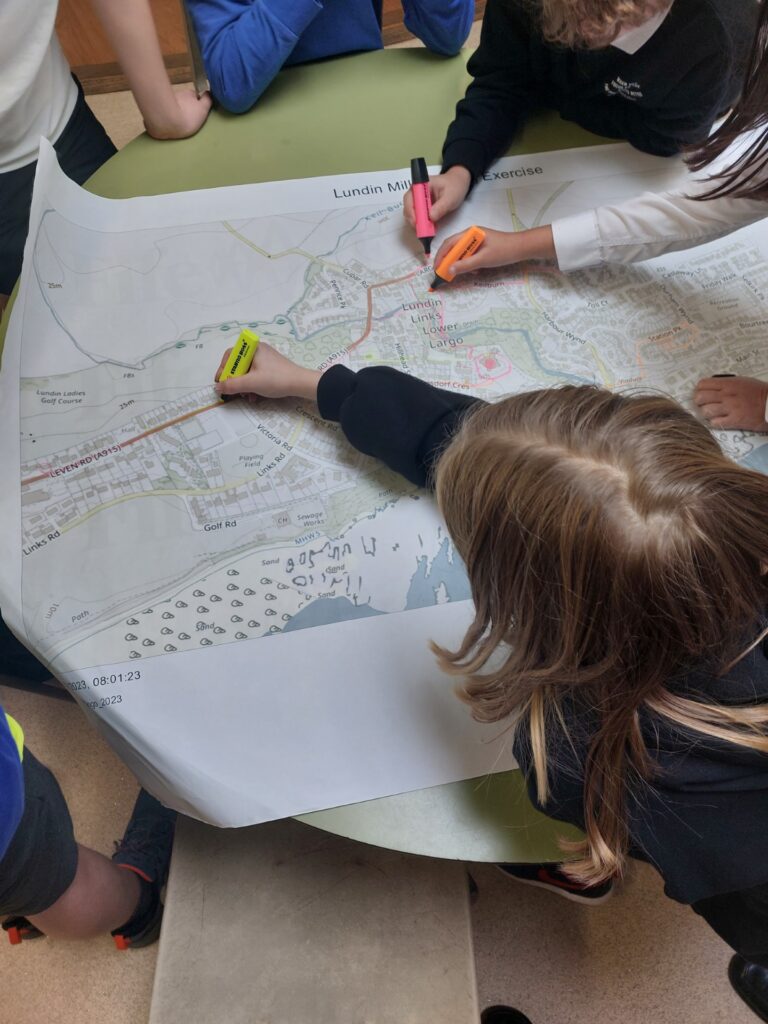
- Partnership with schools, including sessions at Lundin Mill Primary School and inputs from Junior Road Safety Officers.
- A set of six themed workshops to explore community-generated issues in more depth.
- Coding survey results using the Place Standard Tool by Planning Aid Scotland, which highlighted areas needing deeper engagement.
Around 10% of households responded to the initial engagement. This is a strong sign of local interest and involvement.
Embedding Climate and Environmental Considerations
Through the Council’s climate support and the community’s own environmental priorities, several climate‑relevant themes were strengthened in the final plan:
1. Protecting Nature and Biodiversity
The Local Place Plan emphasises preserving green and blue spaces, protecting woodlands such as Keils Den, and exploring designations such as biosphere or protected status for Largo Bay. Community priorities strongly highlighted the importance of natural spaces.
2. Climate‑Informed Development
Climate considerations were introduced into early conversations about housing character, energy efficiency, drainage and avoiding development on high‑value agricultural land.
3. Low‑Carbon Travel and Active Mobility
There is significant community desire for safer walking routes and reduced car dependency. People want to see a connected network of active travel paths between villages, to Levenmouth and to wider regional networks.
4. Climate Resilience and Water Quality
The plan highlights concern about sewage infrastructure, poor water quality, and flood risk. Climate‑informed proposals include upgrading sewage works and protecting natural flood buffers.
Outputs and Achievements to Date
The Local Place Plan is a strategic document. Several practical outcomes are already underway because the plan captured longstanding priorities in an official, structured format:
- Active travel path development – now progressing as a result of identifying unsafe routes between villages.
- Sewage infrastructure upgrades – Scottish Water is addressing historically poor water quality in response to issues raised in the Local Plan Plan.
- Changing Places toilets and accessibility improvements have been identified and supported.
- Additional funding secured through the Scottish Government’s Strengthening Communities Programme to support a further year of work on the Community Action Plan.
- A forthcoming Foundation Scotland funding application to support continued engagement and communication.
New community groups formed as a result of the process:
- Greenways subgroup
- Warm Welcome group
- Resilience group
- Friends of Largo Bay (including Art group and Coastal Monitoring Sub groups)
- Sustainable Development subgroup
These groups are taking forward different strands of the Local Place Plan. They demonstrate deepening community ownership in the Largo area.
Challenges and Learning
Community-led planning came with several challenges:
- Highly vocal individuals with single-issue priorities could overshadow balanced discussion.
- Engagement required significant effort to reach a wide demographic. Particularly groups less connected to traditional communication channels.
- Survey analysis highlighted gaps requiring deeper exploration, showing the value of iterative engagement.
- Some land-use proposals generated strong debate. This underscores the need for transparent evidence and feasibility assessments.
Key lessons
- Use simple, accessible tools (Climate Lens, Place Standard) to structure conversations.
- Engage schools and younger residents directly — their ideas shaped several proposals.
- Diversify communication channels to reach more isolated or less engaged residents.
- Bring in expert speakers to broaden community horizons and stimulate solution‑focused dialogue.
As one community member put it: “People get excited when they realise what’s possible — that’s when the action happens.”
Conclusion
The Largo Area Local Place Plan is a strong example of how community ambition and targeted local authority support can come together. They combine to produce a meaningful, climate-informed vision for the future. Fife Council integrated climate tools, evidence, and strategic alignment into a community-owned process. This ensured the plan reflects local priorities and contributes to wider environmental and resilience goals.
The plan has already delivered tangible outcomes. These include infrastructure improvements, new community groups, funding opportunities and stronger partnerships. As the associated Community Action Plan is developed, this work provides a robust foundation for long-term positive change across the Largo Area.
NHS Fife’s Carbon Literacy journey started when the Public Sector Liaison Officer at Climate Action Fife met with the NHS Fife Sustainability Officer. They explored the support Climate Action Fife could offer and agreed to focus on Carbon Literacy training and its benefits. Together, they decided to co-develop and co-deliver this training.
Developing the Toolkit
While researching, the team found a Carbon Literacy for Healthcare toolkit created by NHS England. Climate Action Fife suggested adapting this toolkit to fit the Scottish context and make it relevant for NHS staff. A working group met with the The Carbon Literacy Project to discuss this process. They gained access to the original materials to tailor them for health agencies in Fife.
Collaboration and Creation
The teams worked closely together. They held regular meetings online and in person. They created an action tracker to divide the slide deck and assign research and editing tasks.
Activities and slides from Fife Council’s toolkit helped improve the NHS Fife version. This process also informed updates to Fife Council’s Climate KnowHow training by sharing lessons learned.
“Fife Council colleague expertise in Carbon Literacy training was invaluable in shaping the toolkit.”
Kathyn Hastie, Sustainability Officer, NHS Fife
Accreditation and Funding
To meet the certification criteria, the team reviewed the slide deck and explained to the Carbon Literacy Project how it met all requirements. After this final step, the NHS Fife Carbon Literacy for Healthcare – General Staff Course achieved accreditation.
NHS Fife funded the development of the toolkit while Fife Council funded 100–150 certifications. This investment will significantly benefit NHS Fife staff and strengthen local climate action.
Conclusion
The partnership between Climate Action Fife and NHS Fife has been vital in creating a tailored Carbon Literacy Training toolkit for Scotland’s health sector. Working together ensured the training was practical, relevant, and impactful.
Next Steps
Building on this success, NHS Fife’s Sustainability Team and Climate Action Fife plan to co-deliver training to Fife Health and Social Care Partnership colleagues. The course will blend NHS and local authority content to reflect their shared working culture.
The partners look forward to growing this collaboration.
Recently, NHS Fife presented the training at an NHS Lothian Sustainability Webinar. The event drew a large audience from NHS Scotland and inspired other boards to start their own carbon literacy programmes. The presentation highlighted the strong partnership between NHS Fife and Fife Council, which played a key role in launching this important work.
Fife Council held seven community workshops in spring 2024 to explore local climate action as part of their Climate Fife Strategy. Residents shared ideas like tool libraries, community gardens, and food projects.
The workshops showed that linking climate action to issues like health and poverty helps engage people. This work is already shaping policies and partnerships to embed climate action in regeneration and health plans across Fife.
Fife Council wanted to engage young people and families around sustainability. To do this, they worked with ScrapAntics at their Cycling Extravaganza event held at the Fife Cycling Park in Lochgelly.
ScrapAntics is a creative recycling social justice enterprise that runs Dundee’s only ScrapStore. Their core values are community, art, recycling, and education.
The event allowed participants to create art objects using bike wheels and old scraps of material. This hands-on exercise encouraged a lot of discussions around reuse and recycling as well as active travel. This fun activity engaged 16 people (9 children and 7 adults).
The activity created meaningful conversations about sustainability and the importance of recycling. It highlighted the creative potential of repurposing materials. It also fostered a sense of community and environmental responsibility among participants.
The collaboration with ScrapAntics was effective. It created conversations with young people and families about sustainability. By combining art and recycling at the Cycling Extravaganza, Fife Council was able to promote active travel and environmental awareness in a fun and interactive manner.
In 2024/25, funding from our Community Climate Grants – Small Grants Fund helped even more groups across Fife involve local people in climate action. Many groups organised activities during Fife Climate Festival. Hundreds of people of all ages took part.
case studies
Download our case studies to see how groups used their grants to get people involved in climate action.
Balmullo Social Committee (pdf)
Batswood (pdf)
Calaiswoods and Duloch Park (pdf)
Cupar Development Trust (pdf)
Curnie Club (Fife Alcohol Support Service) (pdf)
Dunfermline Greenspace Forum (pdf)
EATS Rosyth (pdf)
Fife Young Carers (pdf)
Footprint East Neuk (pdf)
Forgan Arts Community (pdf)
Friends of Pittencrieff Community (pdf)
Kirkcaldy High School Green Spaces (pdf)
Milton and Coaltown of Balgonie Community Council (pdf)
Saline and Steelend Fabulous Food Pantry (pdf)
Saline Environmental Group (pdf)
Seafield Environment Group (pdf)
Touch Community Garden (pdf)
Transition University St Andrews (pdf)
In 2023/24, funding from our Community Climate Grants – Small Grants Fund helped 12 community groups to involve local people in climate action. We were also able to support 8 events organised by community groups during the Fife Climate Festival. At least 467 people took part in activities.
Case studies
Download our case studies to see how groups used their grants to get people involved in climate action.
Aberdour Climate Action Network (pdf)
Balmullo Community Council (pdf)
Forgan Arts Centre (pdf)
Friends of Pittencrieff Park (pdf)
Kingsbarns Community Development Trust (pdf)
Leslie Golf Club (pdf)
My Cowdenbeath (pdf)
St Andrews Botanic Garden Trust (pdf)
Sustainable Cupar (pdf)
West Fife Woodlands Group (pdf)
Youth 1st (pdf)
In January and February 2024, we ran a series of five workshops for community groups. These workshops were a partnership with Fife Climate Hub.
We covered a range of topics including working with the media, planning communications, social media and newsletters.
You can watch recordings of the five sessions below.
How to plan communications
WOrking with the media
Social media mastery
How to make engaging newsletters
Learn to use Canva
Plastic-Free Fife have designed these top tips to run a successful beach-clean or litter pick in your area.
If you organise or participate in beach cleans or other clean-ups, well done! You’re already making a huge contribution to improving our local environment.
Plastic-Free Fife’s members have organised clean-ups for several years. They’ve now put together a few tips on how to make your clean-up events even eco-friendlier. We hope you find these tips useful.
In 2022/23, funding from the Small Grants Fund helped 15 community groups to engage local people in climate action.
The groups used this support to organise a varied range of activities that allowed them to get people involved. These include gardening workshops and growing seedlings to share with local people. Groups ran climate action taster sessions, planted willow ‘fedges’ and monitored local wildlife affected by the climate emergency. Plastic-Free Fife created and launched a plastic-free events guide.
More than 1,000 people from local communities took part in these activities. This created a wave of climate action across Fife.
The young people learned how they can make a difference through climate action and how they can ultimately contribute towards change.
Markinch Community Hub
Case studies
Download our case studies to see how groups used their grants to get people involved in climate action.
Anstruther Improvements Association (pdf)
Bats Wood (pdf)
Burntisland Development Trust (pdf)
Charlestown, Limekilns and Pattiesmuir Nature Conservation (pdf)
Footprint East Neuk (pdf)
Friends of Pittencrieff Park (pdf)
Kingsbarns Community Development Trust (pdf)
Markinch Community Hub (pdf)
Plastic-Free Dunfermline (pdf)
Saline Environmental Group (pdf)
St Andrews Botanic Garden (pdf)
Strathmiglo Conservation Community (pdf)
The Ecology Centre (pdf)
Do you need help to reduce plastic waste at your local festival, gala or sporting event?
Plastic-Free Fife has produced a helpful guide for organising zero-waste events. It contains practical advice for event organisers on waste prevention. management, and communications.
Funding from Climate Action Fife’s Small Grants Fund made this guide possible.